
The Early Days
To appreciate how the valley we now call Jesmond Dene was formed, it is necessary to go back some 300 million years when this area was one vast delta.

To appreciate how the valley we now call Jesmond Dene was formed, it is necessary to go back some 300 million years when this area was one vast delta.

In the 1850s William George Armstrong (later Lord Armstrong) the armament manufacturer, (later Lord Armstrong of Cragside, Northumberland) bought up large areas of the valley. With his wife, he

What then can be found in and around the Dene to remind visitors of the old days? Modern times have seen the demolition of many ancient reminders of the

The Banqueting Hall to St Mary’s Chapel
Cross Jesmond Dene Road opposite the Banqueting Hall and enter a small copse by the wooden gate provided. The copse, a
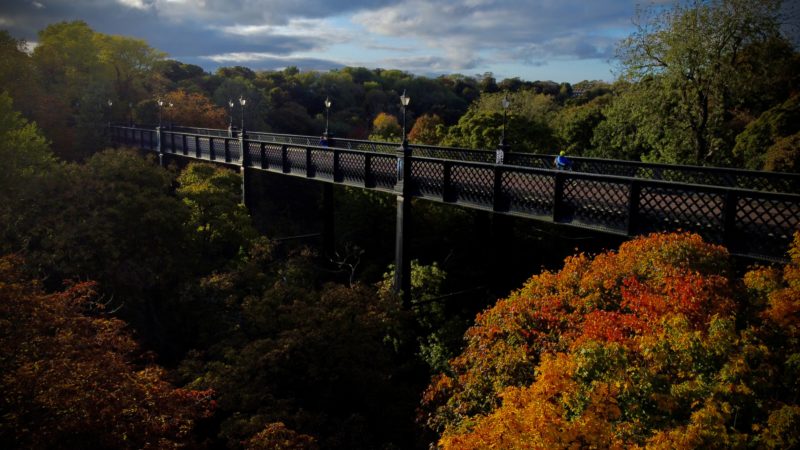
St Mary’s Chapel to Armstrong Bridge
Leaving the Chapel, we make our way to the Holy Well, which is situated some 200 yards west. On the stonehead is

Armstrong Bridge to Heaton Park
From Coleman’s Field we take the right hand path directly opposite the main gates and climb steeply up until we leave Jesmond Dene